Phone: +1 609 439 4775

Field Force Tracker Blog And News

How to Improve First-Time Fix Rate with Better Parts Inventory Management
A technician can arrive on time, diagnose the problem correctly, and still leave without completing the repair. Sometimes the reason is as simple as this: the right part isn’t on the truck. Now the customer needs another appointment. The technician has to make a second trip, dispatch has to find another opening in an already…Continue reading→

Efficient Dispatch Tools for Field Service Technicians
Field service work runs on timing. A technician has to be at the right address, with the right parts, at the right time. When that timing breaks down, everyone feels it. Customers wait longer, techs drive in circles, and dispatchers spend their day putting out fires instead of planning ahead. For years, many service companies…Continue reading→

Mobile App for Field Service Scheduling and Dispatch
Field service scheduling looks simple until the phone starts ringing. One technician is stuck on a job that should have finished an hour ago. Another has called in sick. An urgent service request has just come in, and the nearest technician doesn’t have the right skill set. Meanwhile, a customer is calling the office asking…Continue reading→
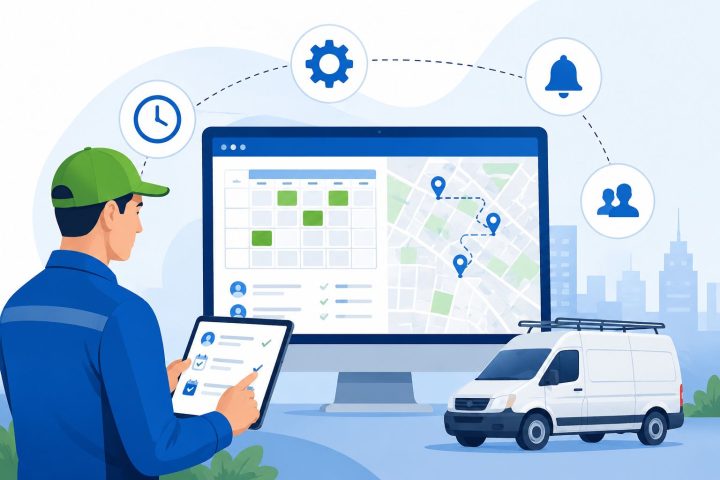
How to Automate Job Scheduling for Field Teams?
A dispatcher juggling twenty technicians on a whiteboard is one sick call away from chaos. Jobs get missed, techs drive in circles, and customers wait longer than they should. Automating job scheduling fixes this problem at the root. It puts the right person on the right job, at the right time, without anyone picking up…Continue reading→
Why Technicians Ignore Paperwork (and What It’s Costing Your Service Business)
Ask any service business owner about paperwork, and you’ll probably hear a sigh before you hear an answer. Work orders that come back half-filled. Job notes that say “fixed” and nothing else. Signatures that never got collected. It happens in HVAC shops, plumbing companies, elevator service firms, alarm and security businesses, and pretty much every…Continue reading→
From Quote to Cash: How Field Service Businesses Can Cut Payment Delays in Half
Every field service business runs on the same basic chain of events. A customer asks for work. Someone writes up a quote. A technician does the job. An invoice goes out. And then, at some point, money comes in. That last step is where a lot of businesses lose time and money. A job can…Continue reading→
Multi-Location Field Service Businesses: How to Keep Every Branch on the Same System
Running field service across more than one location brings a familiar challenge. One branch books jobs on a whiteboard. Another relies on a shared spreadsheet. A third has built its own process that nobody else in the company fully understands. Ask for a clear, company-wide view of today’s operations, and the answer usually takes several…Continue reading→

The Hidden Cost of Reactive Maintenance: Why Service Businesses Are Shifting to Contract-Based Revenue
Most service businesses begin with a reactive model by necessity. A customer calls when equipment fails, a technician is dispatched, the job gets billed, and the business moves to the next request. This approach is manageable at a small scale. As the fleet and customer base grow, however, the “wait and fix” model becomes increasingly…Continue reading→
5 Signs Your Business Has Outgrown Spreadsheets and Needs a Field Service App
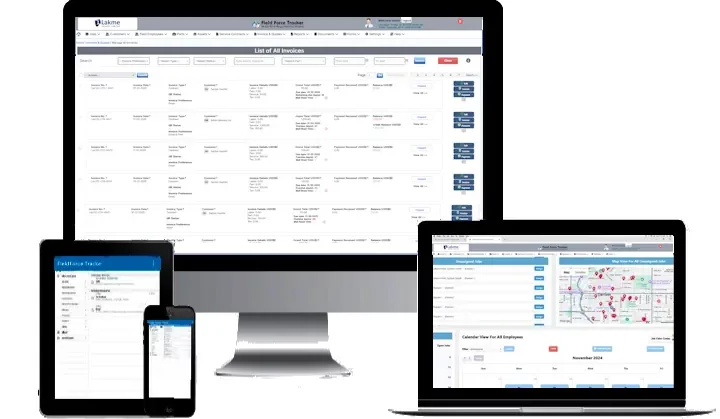
Spreadsheets are great when you’re just starting. One truck, a handful of jobs a week, and a simple sheet with customer names and addresses can carry a service business a long way. But growth changes everything. As you add technicians, take on more customers, and juggle multiple job sites in a day, that same spreadsheet…Continue reading→
How Plumbing Companies Use a Field Service App to Stop Double-Booking
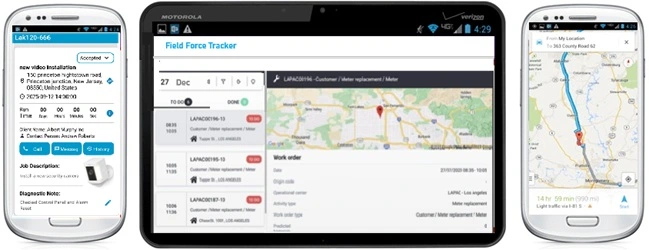
Double-booking is one of the most common scheduling challenges plumbing companies face, and one of the most costly. When two customers are booked into the same time slot, or the same technician is assigned to two jobs at once, the result is a disrupted schedule, a delayed customer, and an office team scrambling to recover….Continue reading→