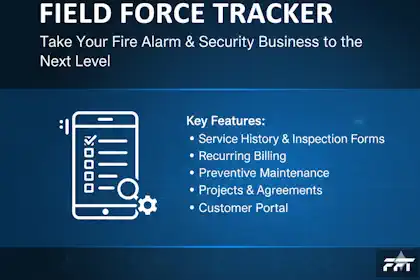
Key Features

Preparing Professional Estimates and Quotes: A Guide for Service Business Owners

Every service business generates daily estimates and quotes to win new business.

Estimating cost for jobs is a key area of running any service business because they control its profitability and growth potential. Customers use estimates to gauge how much a new install will cost them, often drawing in estimates from multiple businesses before settling.

Whether you are a new or experienced business owner, understanding how to prepare a proper estimate is crucial for any business.  It avoids undercutting your services and generate a high success rate. In this article, we’ll cover some job estimate basics, as well as what steps you can take to create the perfect professional estimate.

A good Field Service Software, like Field Force Tracker, has very powerful quote and estimates capabilities. It will help you create professional estimates in minutes.  It also helps you with proper automated follow ups. As a service business, you cannot get a more comprehensive software at such an affordable price of mere $99.99 per month for your team.

What is a professional estimate?

A professional estimate is a document you provide prospective clients. It’s a proper document on the timeframe, costs, and resources needed to complete a project. Professional estimates can be found in every service-based industry from construction and manufacturing to IT and accounting firms. Each business will offer slightly different components in their professional estimate, but the basics generally include:

  • Services you’ll perform
  • Equipment that you would include
  • Parts and Supplies
  • Optional Items
  • Project deadlines
  • Major milestones
  • Material and supply costs
  • Estimated total cost

Each segment that is vital to the success of the project should be included here. Keep in mind that those categories will have subcategories with a more in-depth analysis of the timeframe and costs.

The difference between estimates, quotes, and invoices

Although they all seem similar, there are quite a few key differences between estimates, quotes, and invoices including:

  • Job estimate: This is an approximate cost or high-level ballpark figure for a project, but isn’t legally binding on a business. Let’s say you go out to a job and the customer asks you for an estimate budget for the project. You haven’t done any due diligence on market prices or timelines, so you give them a rough estimate of the price. The customer can’t hold you accountable for that price since it’s not a formal quote.
  • Quote: A quote is a formal proposal and a step above a job estimate, providing extensive detail on the costs of each component and services proposed including scope of the work. Once the customer accepts the quote, it serves as a legally binding contract for the cost and timeframe. This is why it’s important to accurately price your products and services since profitability of business depends on it. A good quote software, like Field Force Tracker, can  shows the profit of the quote when you are making a quote.
  • Invoice: An invoice is a bill for services rendered against which the customer will make a payment. This could be a down payment for a quote, progress payments on a project, or any other item that you provided a service in exchange for a fee. This document is provided to the customer after you’ve been formally hired and includes itemized costs and payment terms.

This table below shows difference between Quote, Estimates and Invoices

FeatureEstimateQuoteInvoice
Work Stage PreliminaryFormal ProposalOften after the work has been completed, but may also be created for receiving an advance.
Approval ProcessNot neededRequiredImplied based on approved quote.
Legal StatusInformal documentFormal and Legally BindingFormal and Legally Binding.
Types of DocumentSimple and InformalDetailed Work Breakdown with detailed scope of the work.Only financial data for making payments.

Each of these three components work together to complete a project. A job estimate is the preliminary discussion amount that leads to a formal quote. After the quote is accepted, the customer will receive an invoice. Properly keeping track of each document in a project is vital to complete the project on time and on budget. A  complete Field Service Software like Field Force Tracker can help you keep all information at one place.

Alarm Monitoring software

What to include in a job estimate

Whether this is your first quote or you have sent dozens before, there are a few components that should be present in each estimate including:

  • Company contact information
  • Project description
  • Overview of the services provided
  • Cost of materials and services

If you are giving the formal quote then you will include additional items such as:

  • Project timelines
  • Total cost
  • Payment terms
  • Additional terms and conditions

You want to use a job estimate as a high-level overview, giving you flexibility if prices increase or you uncover that the timeframe will take longer than initially expected.

How to prepare a perfect professional quote

When creating a professional quote, you want to take your time throughout the process to ensure you are catching key details and accurately projecting costs. Don’t treat this step as another item on your to-do list. It’s really meant to be a sales tool. Building an in-depth and accurate quote will set you apart from competitors through transparency and clear communication throughout the entire process, minimizing any surprises on both your end and the client’s side.

Here are some of our favorite ways to prepare an effective professional quote:

1. Analyze the project scope

An quote needs to have a timeline with an quoted completion date. Milestones should also be present throughout the timeline to ensure your team is staying on track. This also gives you the ability to charge progress payments. Many business owners take a conservative approach to the project timeline, giving plenty of time for delays or unexpected events. With worldwide shipping delays and material shortages, overestimating the time it takes to complete a project is wise.

What is the lead time on material purchases? Do you need to hire additional employees? Both of these questions impact the timeline. For large projects, it may take weeks or months to get a single shipment or find employees to hire. These considerations must be factored into the quote. Keep in mind that you want to manage client expectations, which involves creating a reasonable timeline that the client agrees on.

2. Quote resources

One of the major steps in understanding how to write an quote is to piece together needed resources. This is where the bulk of your quote work will be found because you need to price out any subcontractors, consider material costs, and understand labor costs. Be realistic about the capabilities of your business and don’t be afraid to outsource work to subcontractors. Realizing your capabilities in the estimation process allows you to plan costs properly for areas you won’t be able to handle. Include safeguards in the quote process for unexpected client demands. For example, maybe the client calls you up at the last minute and says they need the flooring for the entire house done in one week. This project might take you two weeks on your own, meaning you will need to find subcontractors or additional employees to help with the work. Have a line item for each resource with an associated cost. This breaks down the costs and gives you the ability to adjust items to find the right price.

3. Utilize the right tools

Online tools can take a significant amount of the burden off your plate. Instead of manually calculating line-item totals or sorting through piles of past quotes, you can use technology. The first piece of software you should have is an estimating tool that stores past quotes, provides guidance on building a current quote, and gives you access to an quote template. These features will save you hours, allowing you to quote more jobs and grow your business.

Equally as important in how to write an quote is a B2B payment software that helps you manage cash flow, send and track invoices, and generate customer reports. An advanced Field Service  software, like Field Force Tracker, gives your business the ability to stay on top of progress payments and track invoices sent to customers. Let’s say a business agrees to the first phase of the construction of a building. Your business will need to collect a down payment and have future billings laid out. Using payment software allows you to invoice customers on time.

4. Present your quote quickly

The presentation of the professional quote shouldn’t be weeks after you talked with the customer. This gives the customer the ability to talk to other companies and search around for a lower quote. An quote email is an email that you send to the prospective client with a document outlining all project costs. First, you will need to introduce yourself and the business. Then, you should give a brief summary of the attached quote. Finally, you will conclude with some benefits of working with your business and the next steps. How to write an quote email is confusing for many business owners, but keep the email short and to the point.

Follow Up on Submitted Quotes

If the customer doesn’t respond for a few days or weeks, schedule a follow-up call to discuss their thoughts on the quote. You might find that the customer changed their mind about the scope of the services or the time frame doesn’t line up. Understanding the reason for the delayed response is critical to improve your conversion and success rates.

Advanced field service software, like Field Force Tracker, has built in automated scheduling. This will allow you to send quote and let the system take care of reminders and follow ups using AI based tools.

Managing Online Approval Process

Modern small business CRM systems, like Field Force Tracker Software, never make you wait on sending a quote and getting it approved. You  simply send quotes electronically and let your clients approve or decline work right away electronically. Quick email notifications update you on the status changes so you can follow up with the customers.

Safeguarding Your Business with Proper Terms and Conditions

It is very important to protect your business with proper terms and conditions. Here are sample terms that we as a leading field service software, Field Force Tracker, recommend to our customers,

1.  Price Validity: This quote is valid for 30 days from the issue date, or the validity date specified in the quote whichever is the earlier. After this period, prices are subject to change without notice and should be re-confirmed.

2. Error and Omissions (E&O): All prices are subject to correction in the event of clerical or system errors or omissions. In the event of a pricing error,  the business reserves the right to amend the quotation to correct the error and request modification to an order, or not accept any orders placed based on the incorrect price.

3. Material/Cost Fluctuations: Due to volatile market conditions, material costs are subject to change. The final price of any specialized product may be adjusted based on a sudden price increase by the manufacturer or supplier at the time of order placement with mutual consent.

4. Change in Scope of Work: This quotation is based on the scope of work described. Any additions or changes to the scope will require a re-quote or a change order at current pricing.

5. Final Approval: This quotation is not a contract and is subject to final review and acceptance by us (xyz).

6. Loss, Damage or Delay: Our company xyz shall not be liable for any loss, damage, or delay occasioned by any causes beyond Seller’s control, including, but not limited to, governmental actions or orders, embargoes, strikes, differences with workmen, fires, floods,
accidents, or transportation delays. IN NO EVENT SHALL SELLER BE LIABLE FOR ANY CONSEQUENTIAL OR SPECIAL DAMAGES.

Comparing field Service software

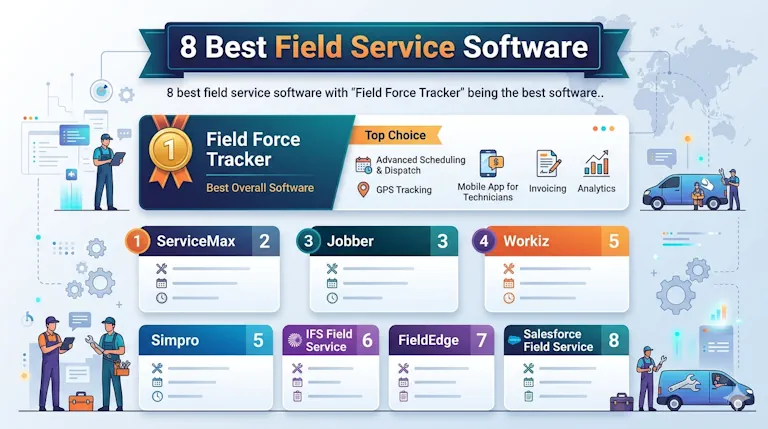
8 Best Field Service Dispatch Apps to Streamline Service Operations and Improve Profitability

App Store: iOS  Google Play: Android

Field Force Tracker’s cloud-based all-in-one field service management software offers advanced scheduling and dispatching features alongside appointment booking, job management, and technician dispatch more. Our advanced dispatching and scheduling software gives field service businesses (like HVAC, plumbing, and electrical, fire alarm and security) the tools they need to keep field service teams flexible and proactive all day long.  By better utilizing their workforce and maintaining higher level of service, they can maintain high level of profitability. This article shows the best FSM software and compares their main functionality.

Field Service Software can be divided into three main categories or groups:

A. Small Team Software : These software are typically designed for handyman and very small teams of 1-5 users. They offer very basic feature but lack more advanced features such inventory, contracts management, billing statements, job automation, third party integrations and advanced financial reporting to run a more organized service business. They are typically used by mom-and-pop businesses or a very small business as they often lack ability to scale for larger teams of 4 or 5 persons. They are often unable support more than ten technicians at the same time or not suitable for bigger teams and lack other industry specific features. Bulk of FSM software marketed falls in this category. Examples are: Jobber, Housecall Pro, Service M8, RazorSync, Workiz etc,

B. Small and Medium Business (SMB) Software : These software are primarily geared for small and medium business (SMB) market with 5+ users. They offer more advanced feature to manage multiple warehouses, inventory management, recurring billing support and large third party integrations. More importantly, they can support larger teams, and sometimes multiple branch offices too. Some software are designed only for a certain business types like HVAc/Plumbing, while others like Field Force Tracker, can offer much more wider features, support for multiple branch offices and departments, and special customization for wider industry types. Examples are: Field Force Tracker, Service Titan, Service Pulse

C.Advanced Enterprise Software: These are purely designed for large enterprises with turnover in billions of dollars and thousands of employees. Large telecom operator or manufacturers may have them as extended module of their ERP systems. They can support 1000+ users and vast geographical areas. They offer vast customization and are very expensive to deploy for most small businesses. Examples are: SAP, Oracle, ServiceCEO, ServiceMax/ SalesForce.

Below we compare the best 8 field service software and describe their features.

1. Field Force Tracker

Field Force Tracker is an advanced Service “CRM” software for a service businesses – maintains customer database, repair history of customer installed equipment, manages service job scheduling to technicians, past invoices, payments and service agreements, track Maintenance Schedule etc. As an all-in-one FSM, it supports wide range of features and service businesses.

Software supports all kind of service businesses and leads in many sectors such as — Elevator Service Companies (that maintain and install elevators and lifts), “Video Surveillance, Security and Fire Alarm” Companies (companies that maintain, install and monitor fire alarms or security alarms in commercial and residential buildings), HVAC companies (hvac is a short form for Heating, Ventilation and Air Conditioning), Plumbing Companies (that provide plumbing services or install plumbing equipment like Water Heaters etc), Electrical Contractors, occasionally on Fitness Equipment and Medical Equipment Repair business (there are not too many businesses in this space), and (commercial) Photocopier Equipment Businesses (it is quite strong here). Field Force Tracker offers specialized software for Photocopier businesses for meter management and recurring billing.

Here’s a summary of our All-in-one Field Service software, Field Force Tracker’s features:

also available to techs via our Mobile App when they’re out on service calls.

 1.1 Smart Scheduling to Improve Efficiency & Profitability

When it’s time to schedule an appointment, dispatch managers can easily see available time slots in the upcoming weeks without leaving the original screen. It makes it easier to schedule jobs that best suits the team.  Smart Scheduling can improve job efficiency and improve productivity for any service business. 

Our Smart job scheduling functionality, which is unique to Field Force Tracker, allows business owners to define, automate, and implement a capacity planning strategy, which optimizes their schedules for profitability.

For example, you can set rules to reduce or exclude annual maintenance appointment slots from a busy holiday week and increase the capacity for high-priority, urgent service calls. Or you can choose to increase capacity for maintenance appointments during slow times. You can auto schedule jobs or in advanced version use AI to help you in scheduling better employee.

This is a game-changer because the work of office employees is greatly facilitated. Office employees don’t need to spend a lot of time to efficiently execute job bookings according to your preset business needs. 

Our field service software further automates the booking process by ensuring that only techs with the skill set required for a given job can be assigned to that task. That way, field service companies can be sure that the right tech is dispatched to the right job every time. 

Once a job is booked and scheduled, automated job confirmations, text or email notifications are sent to the customer to confirm appointment requests. All scheduled appointments are updated and automatically reflected in the dispatch board and the assigned tech’s personal schedule (which they can view via our mobile app).

1.2 AI Powered Schedule Assistant to Book Jobs Faster

Field Service Dispatch App Dashboard

With many software tools (and certainly manual methods), job scheduling requires jumping between different screens to view technician schedules, going back and forth with customers to check their availability, and trying to account for various factors such as technician skills and routing. This is difficult, even for the most experienced dispatch planners. 

Field Force Tracker’s new AI Powered Schedule Assistant can be used directly from the call booking screen to solve these issues and improve margins by suggesting an optimal date, time, and technician that minimizes drive time.

It can also be used from the Job Dispatch Board, job record, and on recurring service work. Technician skills, zones, and non-job events are factored into Schedule Assistant’s recommendations—so you can have peace of mind that the right technicians will be sent to the right jobs.

1.3 Dispatch Board for Easy Field Service Coordination

Field Service Dispatch App Dashboard Calendar for Job Scheduling

Field Force Tracker’s user-friendly dispatch board allows dispatchers to perform most of their work order management tasks without needing to leave the board. This includes being able to see which jobs are unassigned, unconfirmed, dispatched, working, and more. 

From the dispatch board, users have access to:

  • Drag-and-drop functionality: Dispatchers can easily assign or reassign a tech; confirm or reschedule a job; view job location data; and more. 
  • Live activity feed: A feed to see real-time job status (Arrived, Paused, Complete) and to direct-message and communicate with techs (individually or en masse). 
  • Notifications: Alerts that notify the dispatcher of unusual activity or problems that need to be addressed.
  • GPS tracking: With technician GPS tracking, dispatchers (and customers, if enabled) can track the location of field service team members as they’re on their way to a job. Dispatchers can also view techs’ downtime.
  • Schedule and route optimization: Options that help dispatchers coordinate appointments and route planning in an efficient way, including identifying jobs in locations where a tech is already working and rerouting techs when necessary to save on travel time.

Note: Field Force Tracker also offers an add-on product,  Smart Dispatch Pro, with more advanced dispatching features. Using machine learning, Dispatch Pro’s algorithm runs thousands of scenarios to find the best technician for every job. This, plus its intuitive dispatch board automations, saves your dispatchers time, improves customer service, and maximizes profit. 

1.4 Advanced Inventory Management to Manage Costs

Inventory management is very important to track expenses and sales and the profitability. Most low end FSM software lack inventory management or have very rudimentory inventory management. Field Force Tracker is an advanced FSM and its inventory management is very comprehensive. It offers the following features:

  • Parts Inventory with cost and profit margins
  • Multiple Warehouse Support
  • Mobile Integrated Inventory Management
  • Parts Purchases and Purchase Orders Management
  • Serialized Parts Support
  • Accounts Payable Support
  • Inventory Audits
  • Data imports
  • Bulk Price Changes for Dealers
  • Dynamic Inventory Management
  • Truck Inventory Levels
  • and Many more Inventory Features

Track High-Value Equipment from Warehouse to Job Site

With Field Force Tracker, you can track high-value items using serial numbers linked to jobs, techs, and invoices. This helps you avoid losses, prove service history, and maintain warranty coverage.

  • Serialized Tracking System: Assign unique IDs by SKU and track individual inventory units from the warehouse to installation.
  • Job and Technician-Level Tracking: See when and where each serialized item was used, by job or technician.
  • Warranty Data Visibility: Track warranty details to simplify repairs, replacements, and documentation.
  • Barcode Scanning On-Site: Scan barcodes on the materials to update stock location in real time.
  • Create Purchase Orders on the Go: Build and send POs right from the job site when parts run low.

1.5 Mobile App to Ensure Your Techs Stay Agile

Technicians using our powerful field service Mobile Apps (via Android and iOS mobile devices) enjoy mobile access to their appointments and job details for the day, and a wide range of functionality. 

Techs can manually dispatch themselves to each new job, and provide the office with status updates (such as “arrived” when they’ve reached a job site).

As new appointments are scheduled, or existing ones rescheduled, changes are reflected in real time within the technician’s dashboard.

Crucially, like dispatchers, techs can send and receive messages from their mobile device, so they keep on top of schedule changes, and communicate with the office about jobs. This also allows them to answer questions from the office without interrupting their workflow to take a call. 

From their home screen dashboard, techs can access real-time data and:

  • Listen to call recordings between customers and dispatch manager 
  • View a customer’s service history
  • Send text notifications to customers to confirm and revise arrival times or follow up 
  • Take and upload pictures
  • Create estimates
  • Provide customers with Good Better Best presentations
  • Order parts
  • Collect signatures on work orders
  • Help customers apply for financing
  • Take check and credit card payments
  • And more

1.6 Web Scheduler for Direct Online Bookings

For customers who prefer to book their appointments online, our user-friendly website widget allows them to make online bookings without ever having to talk to anyone on the phone. 

The web widget syncs with Field Force Tracker’s dispatch board and shows real-time availability, so jobs are immediately confirmed. Appointments can also be canceled or rescheduled through a link that is sent out by email or text message.

Because our widget is fully integrated, you don’t need to wrestle with APIs or pay an additional fee for a third-party online call-booking tool that you have to manage separately.

1.7 Integrated Scheduling & Dispatching with Other Business Operations

Field Force Tracker software does much more than scheduling and dispatching. Our dispatching features are integrated with the entire workflow, which hugely increases efficiency and scalability. Dispatchers, techs and management can see all customer information, job details, invoices, materials pricing, inventory management, and more, in one place. 

Field Force Tracker offers: 

  • Payment Processing of Jobs and Contracts
  • Recurring Payment, Customer Balance Reports Generation
  • Parts and Inventory Management Integrated with Work Orders and Mobile Apps
  • Payroll features that decrease payroll prep time by automatically providing time tracking and timesheets (while syncing with the dispatch board); calculating overtime, commissions and bonuses; and helping you track and monitor crucial job-costing data in real time.
  • Accounting software integration with Viewpoint Vista, QuickBooks®, and Intacct.
  • Customer relationship management (CRM) tools that help improve office organization and workflow (in addition to improving the customer experience).
  • Service Agreement Software that helps you grow and manage preventative maintenance contracts.   
  • Field Reporting Software that helps you monitor key financial performance indicators (KPIs), such as: CSR and technician metrics, revenue trends, and more.

To see why Field Force Tracker is trusted by 100,000+ field service businesses, schedule a call to get a free, live, one-on-one walk-through of how our field service software can help you schedule and dispatch more efficiently, work smarter, and grow revenue.

1.8 Call Booking That Optimizes Customer Experience

Field Force Tracker’s optional  call booking feature helps your CSRs efficiently book calls from the moment a customer calls your company with a service request. 

Using drop-down menus and custom prompts, CSRs can simply enter the customer information directly into their system, including job type, start date, priority, and more. 

If the call is from an existing customer, Field Force Tracker will tell the CSR exactly who is calling before they even answer the phone, so CSRs can greet them by name, boosting customer satisfaction from the get-go. They can also pull up their complete service history (estimates, work orders, invoices, etc.), property data, and more from the very same screen, providing valuable efficiency gains and ensuring that they’re prepared to answer questions and swiftly book new jobs.

With Field Force Tracker, there’s no need for the CSR to juggle a pen, paper and spreadsheet, put customers on hold, or call them back while they pull paperwork from a filing cabinet or spreadsheet. 

We even provide examples of call center script templates that can be used in your own specific business. And, in the event that anything does go wrong, our Call Recording feature allows supervisors to replay a CSR’s conversation with a customer to verify the facts.

Note: Recordings are

2. FieldEdge

FieldEdge is a field service management software with scheduling tools for service businesses. As well as scheduling and dispatching, FieldEdge offers a wide range of features in a basic system.including functionality for quotes and invoicing, service agreements, and more. It lacks the advanced Inventory management, contracts management, Meter based billing and many other features available in Field Force Tracker.

Learn more about how Field Force Tracker compares to FieldEdge here.

3. Service Fusion

Service Fusion describes itself as a simple field service Software.” Like Field Force Tracker, Service Fusion offers a wide range of key features in addition to scheduling and dispatching, including estimates, invoices, customer management, and more.  It lacks the advanced Inventory management, contracts management, Meter based billing and many other features available in Field Force Tracker.

Learn more about how Field Force Tracker compares to Service Fusion here

4. Housecall Pro

Housecall Pro is a field service management software that includes scheduling and dispatching features among other tools for managing field service businesses. Unlike Field Force Tracker, it is rather a low end software for small teams or freelancer operations. It lacks the advanced Inventory management, contracts management, Meter based billing and many other features available in Field Force Tracker.

This solution supports all aspects of the workflow, including scheduling jobs, assigning technicians, managing customer information, invoicing (including QuickBooks Online), and payment processing.

Learn more about how Field Force Tracker compares to HouseCall pro here

5. Jobber

Jobber is an all-in-one field service management software that’s widely regarded as user-friendly.  Unlike more advanced Field Force Tracker, it is meant for small teams with very simple needs. It is an handyman type software instead of a more advanced software like Field Force Tracker. It lacks the advanced Inventory management, contracts management, Meter based billing and many other features available in Field Force Tracker.

Jobber is customizable to fit your process, so you can schedule jobs, optimize routes, send quotes and invoices by text, and get paid on-site via the software’s mobile app. 

Jobber is popular with small businesses that want a simple, easy-to-use solution. 

Check out our comparison article: Jobber vs. Field Force Tracker

6. FieldPulse

FieldPulse is an all-in-one field service management software for field service teams. FieldPulse offers scheduling and dispatching features, estimating, advanced CRM, and a customer portal. It has many features common to a small team field service software. It lacks the advanced Inventory management, contracts management, Meter based billing and many other features available in Field Force Tracker.

FieldPulse is considered to be more suited to small- and medium-sized contractors rather than commercial businesses.

Learn more about how Field Force Tracker compares to Field Pulse here

7. ServiceM8

ServiceM8 is a simple field service management software designed for small teams and small contractors. It is simple to use and similar to jobber software popular with handymans and small business. It lacks the advanced Inventory management, contracts management, Meter based billing and many other features available in Field Force Tracker.

Learn more about how Field Force Tracker compares to HouseCall pro here

8. SeviceTitan

ServiceTitan  is a field service management primarily focused on large Hvac contractors. It is a complex software and starts at a very high price point. Despite their costs, they have been marketed very successfully to a large number of contractors. Like Field Force Tracker, it offers many features for large business such as the advanced Inventory management, contracts management etc. However, it is primarily focused on residential HVAC and Plumbing businesses systems and lacks many other features available in Field Force Tracker.

Learn more about how Field Force Tracker compares to Service Titan  here

Field Force Tracker Software:

Field Force Trackeris a comprehensive all-in-one Field Service software solution built specifically to help service companies streamline their operations, boost revenue, and substantially elevate the trajectory of their business. Our comprehensive, cloud-based Field service software platform is used by thousands of electrical, HVAC, plumbing, Alarm and Security, and Elevator across the country—and has increased their revenue by an average of 30% in just their first year with us.

7 Things A Good Service Job Dispatch Software Should Do for You

A good Field Service Management software or job service dispatch software is an enabler for the success of your service business.  The right software is built around customer service at its heart, giving you good insights on how to best serve customers. 

Here are the six things that your field service platform should provide you besides the basic job dispatch, inventory management, quotes management and billing functions.  These are the six important data and information that your field service platform should provide. A good Field Service Software, like Field Force Tracker,  provides all these core reports.

1. Tracking Source or Origination of Business Leads

Digging for data has never been fun. Put the proverbial shovel away and take a fresh approach to your back-of-house service management. Customer service and operations alike need to know where business is coming from, so lean into technology to find out. 

Track Referral Sources

Where are prospects calling from? Caller ID can only tell you so much, but you can get deeper insights by investing in the right tools. For instance, why not buy toll-free phone numbers? This unlocks the door to see where new customer calls are coming from because you can link each unique line to specific referral sources to track leads and conversions.

Track Call Sources to Understand Effectiveness of your Advertising

Is a caller brand new to you or a current customer? Marketing tracking can show if someone’s finding you because of an ad or another source. If the caller is a customer, the best service dispatch software should populate details regarding estimates, jobs, and work history. 

2.   Manage Inventory Costs and Levels

Parts and Inventory in a business can cost a lot, and a Powerful Inventory Management Software like field force tracker can provide powerful inventory management functionality built in a Field Service Software.   Inventory reports provide real-time data on stock levels, turnover, and valuation. They are essential for preventing stockouts and overstocking, reducing holding costs, and boosting order fulfillment. By tracking sales trends, businesses optimize cash flow and make informed, data-driven procurement decisions.

These reports are critical tools for daily operations, financial control, and long-term strategy.

Core Benefits

  • Cost Optimization: Identifies slow-moving or obsolete items, preventing capital from being tied up in excess stock and lowering warehouse storage fees.
  • Financial Clarity: Calculates the exact monetary value of on-hand assets for budget planning, audits, and accurate tax reporting.
  • Demand Forecasting: Utilizes historical data to identify seasonal fluctuations and predict future consumer demand, enabling proactive purchasing.
  • Loss Prevention: Highlights discrepancies between recorded and actual stock to pinpoint issues like theft, damage, or administrative errors.
  • Improved Customer Satisfaction: Ensures that top-selling items are always in stock, minimizing delays and maintaining brand trust.

Key Reports to Utilize

  • Stock on Hand: Shows exact quantities and values across all warehouse or store locations at any given time.
  • Low Inventory: Flags products that have fallen below your preset reorder threshold, ensuring timely reordering.
  • Inventory Turnover: Measures how often a product is sold and replaced over a specific period, helping you apply the 80/20 rule to focus on your most profitable items.

3.  Help Create Professional Quotes and Estimates

Estimates and proposals are critical parts of any contract-based business. The ability to accurately estimate a job and present that information to clients can make the difference between winning bids and losing to the competition. 

An effective estimate should be accurate, professional, persuasive, and prepared quickly. But that’s easier said than done, as preparing estimates can involve a lot of manual effort.

A good field service software can help you prepare and present this software to your customers and win new business.

Preparing professional quotes and estimates requires a clear scope of work, itemized costs, and an accurate timeline. Distinguish between an estimate (an educated prediction of costs that can fluctuate) and a quote (a fixed, legally binding price for the defined project).

A professional document helps build client trust and wins more jobs. Ensure you incorporate the following core components into your documents:

1. The Anatomy of a Winning Estimate or Quote

  • Professional Branding: Include your company name, logo, contact info, and website.
  • Client Details: List the client’s name, property address, and billing information.
  • Detailed Scope of Work: Define exactly what you will deliver, the materials you will use, and—just as importantly—what is excluded to prevent scope creep.
  • Itemized Costs: Avoid lumping all services into one line item. Detail labor hours, material quantities, and unit prices.
  • Project Timeline: Provide estimated start and end dates, along with any key project milestones.
  • Terms & Conditions: Outline your payment schedule (e.g., 50% upfront, 50% on completion), late fees, and the document’s expiry date.

2. Best Practices for Delivery

  • Use Clear Terminology: Never use “quote” and “estimate” interchangeably. Label the document clearly so the client knows whether the price is fixed or subject to change.
  • Present Options: To make your bid stand out, offer three tiers of service (e.g., Basic, Standard, and Pro).
  • Get Written Sign-Off: Require the client to sign and date the document before you begin work to ensure everyone is on the same page.
  • Leverage Software: Save time by using invoicing and quoting tools like Field Force Tracker to generate professional quotes

4 Make it Easy to Generate Invoices and Collect Payment

A business needs ability to generate invoices and then collect payment in the field. A Field Service software like Field Force Tracker can make it very easy to invoice and collect payment. It keeps all the financial information together and syncs with Quickbooks.  It integrates with Stripe, which is a payment processor. It makes it easy to collect payment.

Generating invoices and collecting payments efficiently requires a straightforward, step-by-step workflow: create the invoice, define payment terms, send it to the client, and track the payment. Using integrated software like Field Force Tracker ensures seamless tracking and faster processing.

Step-by-Step Invoicing and Payment Workflow

1. Create the Invoice

  • Include essential details: Add your business information, the client’s name/address, a unique invoice number, the issue date, and the due date.
  • Itemize services/products: Clearly describe the work done, hours worked or units sold, and the corresponding rates.
  • Calculate totals: Include subtotal, taxes, and any discounts applied to determine the absolute final total.

2. Set Payment Terms

  • Specify when the payment is due (e.g., Net 15, Net 30, or Due on Receipt) to avoid confusion.
  • State your accepted payment methods clearly (e.g., Credit Card, ACH bank transfer, check, or digital wallets).

3. Deliver the Invoice

  • Send the invoice securely via email, text message, or client portal. Many platforms allow you to send a secure, trackable link.

4. Track and Collect Payment

  • Enable an automated “Pay Now” feature in your invoicing software to allow clients to pay directly online with a single click.
  • Use accounting software to automate follow-ups, set payment reminders, and record payments as they are deposited.

5 Include Powerful Job Dispatch and Service Management

Job and dispatch software streamlines field service operations by automating scheduling, optimizing routes, and connecting the back office with mobile workers. Essential capabilities include drag-and-drop calendars, real-time GPS tracking, automated customer notifications, and mobile apps for technicians.

Core features are categorized by their function in the dispatch workflow:

Scheduling & Dispatching

  • Visual Dispatch Boards: Drag-and-drop interfaces to easily assign, reassign, and view schedules by day, week, or month.
  • Smart Auto-Assignment: Automatically match technicians to jobs based on their availability, specific skill sets, and geographic location.
  • Recurring Job Management: Easily set up, track, and automate preventive maintenance contracts and recurring service schedules.

 Routing & Fleet Management

  • Route Optimization: AI-driven mapping that calculates the most fuel-efficient and time-saving routes, factoring in real-time traffic and multiple stops.]
  • Live GPS Tracking: Command center dashboards that allow managers to see the exact location and status of all vehicles and field workers.
  • Geofencing: Triggers automatic status updates or customer alerts when a technician enters or leaves a specific service radius.

Mobile Technician App

  • Job Details & History: Field workers receive full access to work orders, client history, and equipment blueprints on their devices.
  • Electronic Proof of Delivery (ePOD): Capture customer signatures, take before-and-after photos, and fill out digital checklists while on-site.
  • Time & Inventory Tracking: Technicians can clock in/out of shifts and log materials used straight from the field to keep inventory updated.

 Customer Experience

  • Automated Alerts: Send SMS or email updates with appointment confirmations, technician tracking links, and “On My Way” notices.
  • Client Portal: Give customers a dedicated space to book jobs online, view past invoices, and approve quotes.

6.  Provide Comprehensive Reporting Data on a Dashboard

Imagine: This information is in this physical file folder, but these details are shared inside the service dispatch software. Talk about disorganization. There’s value in keeping your business data in one place, from easy access to statistics tracking that’ll help you improve. 

Performance Details 

Even the best field service businesses aren’t perfect. You’re always looking for ways to improve and make better decisions, right? With a customizable dashboard inside your field dispatch software, you can see how well various efforts are working, such as scheduling (and opportunities to improve it), training, and marketing.

Everything in One Central Location

Speaking of customization, when your service dispatch software allows you to configure your dashboards to your business needs, you can make it your all-in-one hub. Monitor the most important details in one place. And if your service software is mobile-ready—and even includes an application—you can retrieve what you need across devices without being tethered to a desktop.

7.  Maintain Comprehensive Customer History

Your field service operations not only need to be on top of their game but also maintain a level of consistency. One of the best ways to do this—and provide information across the organization—is to maintain excellent customer history.

Excellent customer history allows you to serve your customer better. You maintain repair history of their equipment, their past payments and their warranty information.

You can also know all the past correspondence and events on the customer account.

Filed Force Tracker – A Service Dispatch Software That Beats the Competition Hands-Down

We could describe in length about what the top field service software should do for your business. But your customers deserve the best services and value for their money—so a good job and service dispatch software can help you in this. It can also help you improve in your profitability. Capabilities such as tracking, support, all-in-one dashboards, and quality control can help you get there. 

Field Force Tracker is customer-focused. That’s why our software goes above and beyond, from customer service functions to technician deployment. The proof is in the pudding—check out our comparison infographic to learn how we stack up to the competition.